• B-hUPA/hUPAR mice

    C57BL/6-Plautm1(PLAU)Bcgen Plaurtm1(PLAUR)Bcgen/Bcgen • 112324

    B-hUPA/hUPAR mice

    Product nameB-hUPA/hUPAR mice
    Catalog number112324
    Strain nameC57BL/6-Plautm1(PLAU)Bcgen Plaurtm1(PLAUR)Bcgen/Bcgen
    Strain backgroundC57BL/6
    NCBI gene ID (Human)
    AliasesATF; QPD; UPA; URK; u-PA; BDPLT5; CD87; UPAR; URKR; U-PAR

    在此页面上

    • Targeting strategy
    • Phenotypic analysis
    • Efficacy

    海报

    查看全部

      发表文章

        Targeting strategy

        The full coding region of mouse Upa gene was replaced by human UPA coding region sequences in B-hUPA/hUPAR mice. The coding region except signal peptide of mouse Upar gene was replaced by human UPAR counterpart gene sequences in B-hUPA/hUPAR mice.

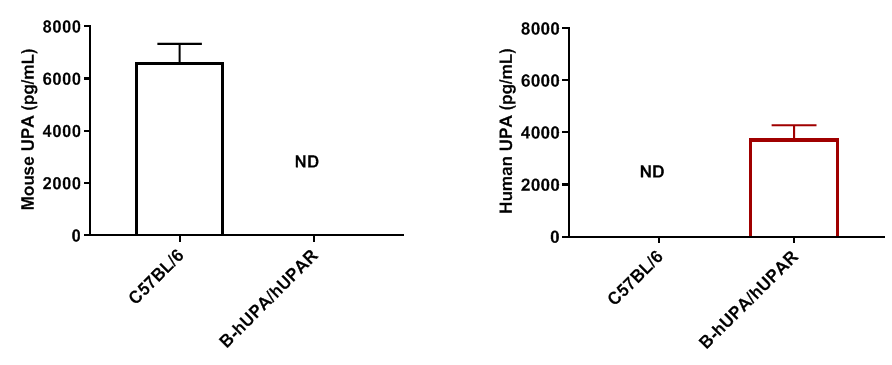
        Protein expression analysis
        Strain specific UPA expression analysis in homozygous B-hUPA/hUPAR mice by ELISA. Serum was collected from wild-type C57BL/6 mice and homozygous B-hUPA/hUPAR mice (male, 9-week-old, n=3), and analyzed by ELISA with species-specific UPA ELISA kit. Mouse UPA were detectable in wild-type C57BL/6 mice. Human UPA was exclusively detectable in homozygous B-hUPA/hUPAR mice but not in wild-type mice.

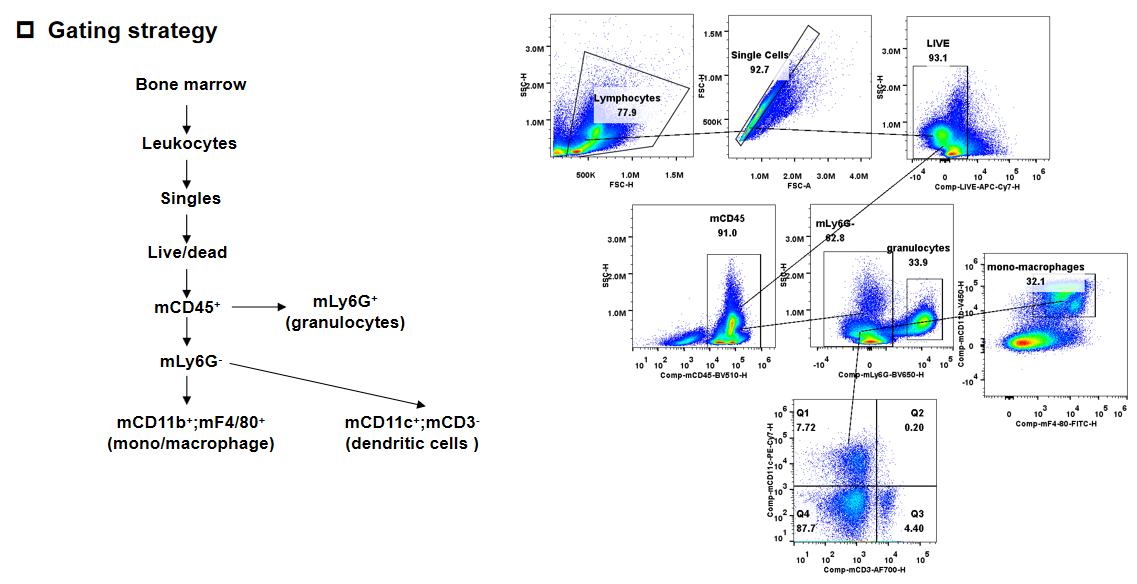
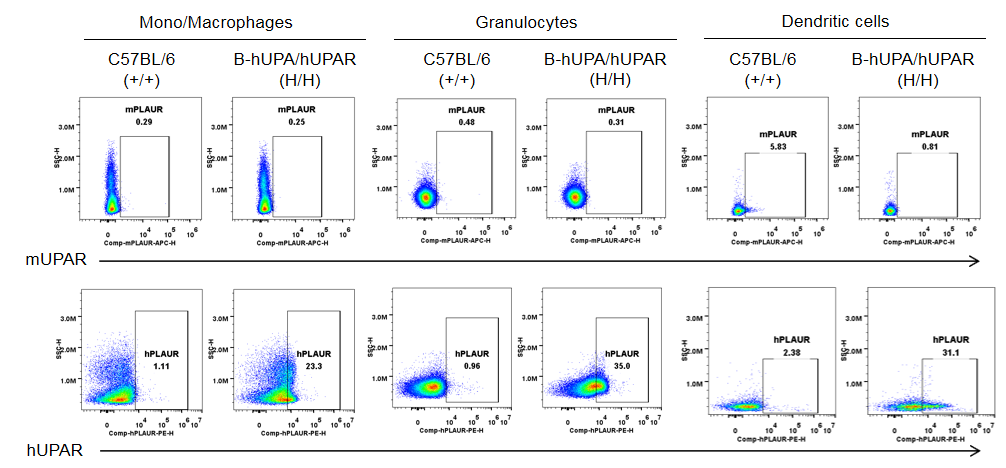
        Strain specific UPAR (also named PLAUR) expression analysis in homozygous B-hUPA/hUPAR mice by flow cytometry. Bone marrow were collected from wild-type C57BL/6 mice (+/+) and homozygous B-hUPA/hUPAR mice (H/H), and analyzed by flow cytometry with species-specific anti-UPAR antibody. Mouse UPAR was only detectable in in dendritic cells of wild-type mice. Human UPAR were exclusively detectable in mono/macrophages, granulocytes, and dendritic cells of homozygous B-hUPA/hUPAR mice but not in wild-type mice.

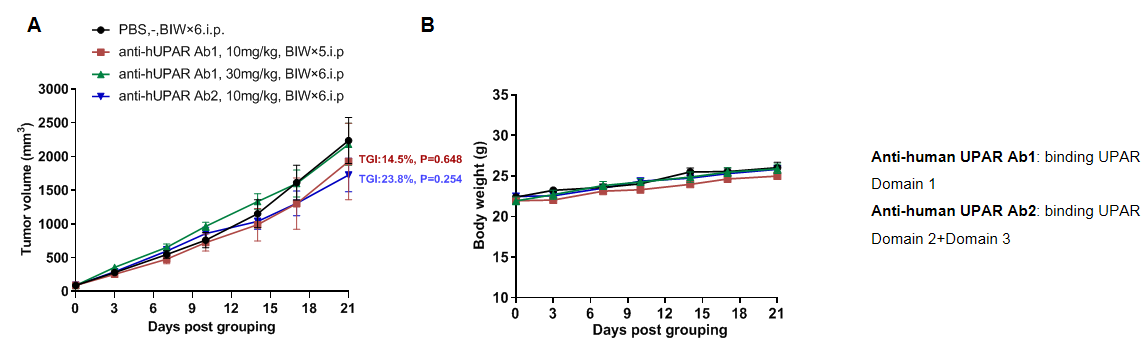
        In vivo efficacy of anti-UPAR antibodies
        Antitumor activity of anti-UPAR antibodies in B-hUPA/hUPAR mice bearing B-hUPAR MC38 cells. (A) Tumor growth in B-hUPA/hUPAR mice that treated with anti-UPAR antibodies (in house) indicated in the panel. (B) Body weight changes during treatment. Murine colon cancer MC38 cells that express the human UPAR protein were subcutaneously implanted into homozygous B-hUPA/hUPAR mice (female, 7-9 week-old, n=6). Mice were grouped when tumor volume reached approximately 100 mm3, at which time they were treated with antibodies. Values are expressed as mean ± SEM.
        Binding assay of anti-UPAR antibodies with B-hUPA/hUPAR mice

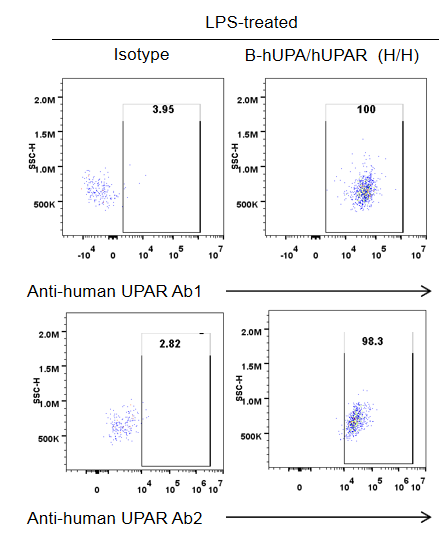
        Analysis the binding of anti-human UPAR antibodies with B-hUPA/hUPAR mice by flow cytometry. Macrophages in ascites of B-hUPA/hUPAR mice were performed to assess anti-human UPAR antibodies (in house) binding. Both antibodies bind well with human UPAR in homozygous mice.

        Anti-human UPAR Ab1: binding UPAR Domain 1

        Anti-human UPAR Ab2: binding UPAR Domain 2+Domain 3

        * When publishing results obtained using this animal model, please acknowledge the source as follows: The animal model [B-hUPA/hUPAR mice] (Cat# 112324) was purchased from Biocytogen.
        站点地图